The 80 Percent Solution: Why Generic Medications Deserve a Second Look From Cost-Conscious Americans
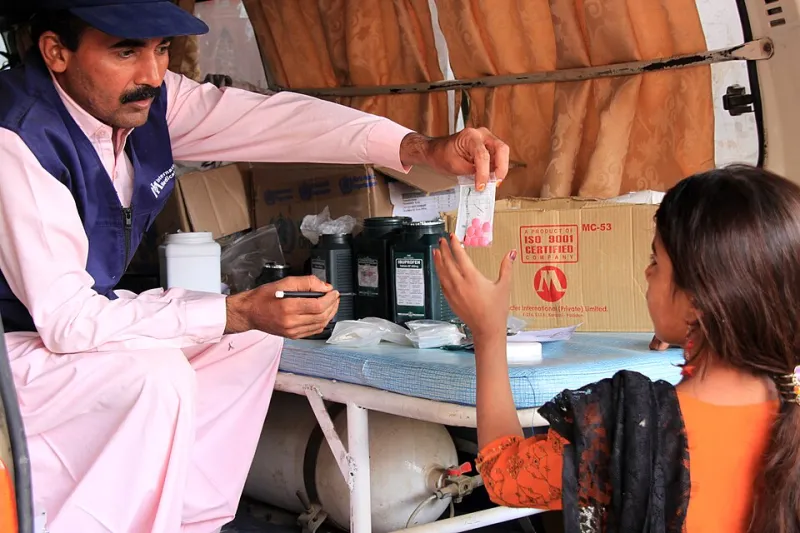
Photo: DFID - UK Department for International Development, CC BY 2.0, via Wikimedia Commons
For millions of Americans, the pharmacy counter has become a place of difficult math. A single month's supply of a brand-name medication can carry a sticker price well over $300, even for drugs that have been on the market for decades. What many patients do not realize is that the same molecule, made under the same federal standards, is often sitting one shelf away at a fraction of the cost. Understanding how generic drugs work — and how to ask for them — is one of the most reliable ways to lower a household's prescription spending.
Identical Medicine, Different Price Tag
The most common misconception about generics is that they are somehow a lesser product: a knockoff, a diluted version, a compromise. In reality, the U.S. Food and Drug Administration requires a generic to demonstrate bioequivalence to the brand-name original. That means the generic must deliver the same active ingredient at the same dose, at the same rate, into the bloodstream.
What a generic is not required to copy is the packaging, the pill's color, or the marketing budget behind the original. And that last item is the crux of the price difference.
Where the Savings Come From
Developing a new drug from the laboratory bench to FDA approval routinely costs hundreds of millions of dollars and takes a decade or more. To reward that investment, federal law grants the original manufacturer a period of market exclusivity, during which competitors cannot sell copies. When that window closes, other manufacturers may file an abbreviated application — known as an ANDA — proving their version is equivalent without repeating the full clinical trial process.
Several manufacturers can then enter the market at once. Competition does the rest. With no need to recoup research costs and multiple companies vying for the same prescription volume, prices fall dramatically — often by 80 to 90 percent relative to the brand.
Common Medications With the Largest Price Gaps
Some of the most widely prescribed drugs in the United States show the starkest contrast between brand and generic pricing:
- Atorvastatin (brand: Lipitor) — a cholesterol-lowering statin whose generic is available for a few dollars per month at many pharmacies.
- Sertraline (brand: Zoloft) — a commonly prescribed antidepressant with widely available low-cost generics.
- Metformin (brand: Glucophage) — the first-line medication for type 2 diabetes, generic for pennies a day.
- Lisinopril (brand: Prinivil, Zestril) — a blood pressure medication among the cheapest prescriptions in the country.
- Levothyroxine (brand: Synthroid) — a thyroid hormone replacement where the brand can cost many multiples of the generic.
Not every medication has a generic equivalent, and in some therapeutic categories — particularly newer biologics — the alternatives are called biosimilars, which follow a related but distinct approval pathway. Still, the majority of prescriptions written in the United States today can be filled generically.
How to Make the Switch
Start the conversation with your prescriber
Many patients assume their doctor will automatically prescribe the cheapest option. Often the prescription is written with the brand name simply out of habit. When your physician writes or renews a prescription, ask directly: Is there a generic version of this? Is it appropriate for me?
Know the substitution rules in your state
In most states, pharmacists are permitted — and in many cases required by insurance plans — to substitute a generic unless the prescriber indicates otherwise. Some prescriptions carry a "dispense as written" notation, which prevents automatic substitution. If you see one on your prescription, it is worth asking why.
Check your plan's formulary
Insurance formularies are tiered lists of covered drugs. Generic medications typically occupy the lowest tier with the smallest copayment, while brand-name drugs — especially those with a generic alternative — may sit in a non-preferred tier or be excluded entirely. Your insurer's formulary is usually available online or by phone, and reviewing it before your next fill can prevent surprises at the register.
Comparison-shop within the rules
Cash prices for the same generic can vary substantially between pharmacies. Discount card programs and transparent pricing tools can reveal the lowest local price, and some pharmacies offer select generics at deeply reduced list prices. A few minutes of comparison can save more than a coupon ever will.
A Note on Safety
Every generic sold in the United States, whether manufactured domestically or abroad, must meet the FDA's manufacturing and quality standards and is subject to facility inspection. If you ever receive a medication that looks, tastes, or performs differently than expected, raise it with your pharmacist — occasionally a different generic manufacturer has supplied your refill, which is normal, but it is always worth confirming.
The Bottom Line
The generic drug system exists precisely so that effective medicine does not have to be expensive medicine. For patients managing chronic conditions on fixed budgets, the difference between brand and generic pricing is not a rounding error — it can be the difference between filling a prescription and going without. Ask your doctor, ask your pharmacist, and check your formulary. The savings are legal, verified, and often immediate.