Half a Pill, Half the Truth: When Patients Stretch Their Prescriptions and What Pharmacists Wish They Knew
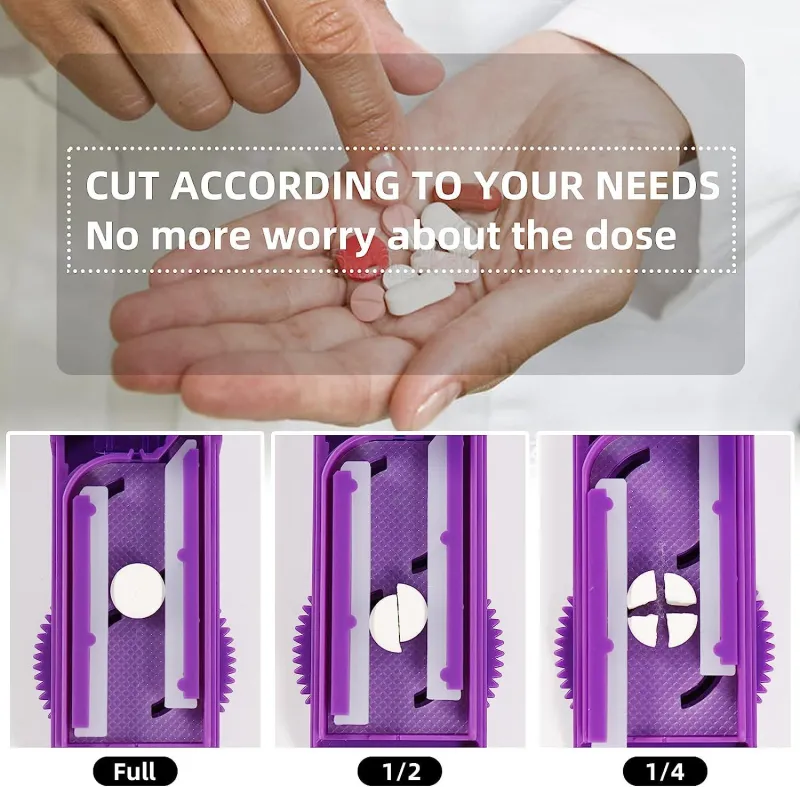
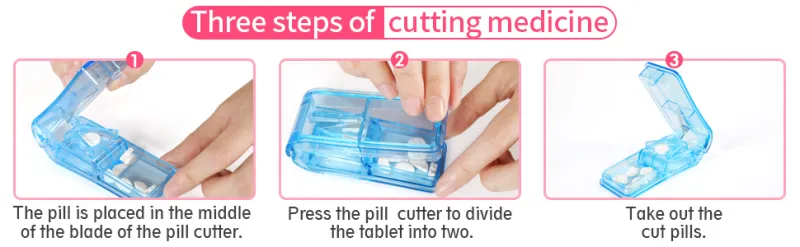
Photo: pill splitter cutting tablet in half on pharmacy counter, via www.gosupps.com
The pill splitter is one of the best-selling accessories in American pharmacies, and not because doctors prescribe half doses very often. It sells because patients buy it themselves — usually after doing the math on a monthly copay and deciding that a 20 mg tablet cut in half is functionally the same as a 10 mg tablet at half the price.
Sometimes that math is correct. Sometimes it is catastrophic. The difference, pharmacists say, comes down to a handful of details printed on the label that most patients never learn to read.
The Economics of a Halved Tablet
The instinct is understandable. Prescription drug spending remains one of the most unpredictable line items in American household budgets, and a medication that costs $60 a month is genuinely difficult to absorb for a family on a fixed income. Surveys by national health foundations have consistently found that a meaningful share of adults report skipping doses, delaying refills, or cutting pills to make a prescription stretch further.
Pharmacists see the downstream evidence of this. A blood pressure reading that was controlled for years suddenly isn't. A patient returns with tremors, dizziness, or breakthrough symptoms and, only after careful questioning, admits the bottle has been lasting twice as long as intended.
"Nobody sets out to misuse their medication," one retail pharmacist put it. "They set out to save money. The problem is that not all pills are designed to be divided."
When Splitting Works — and When It Never Does
There is a legitimate version of this practice. Doctors sometimes deliberately prescribe a higher-strength tablet with instructions to take half, because the lower dose isn't manufactured or the higher strength costs the same as the lower one. In those cases, splitting is part of the plan, not a workaround.
Tablets that are generally reasonable to split share a few traits: they're immediate-release, they're scored down the middle, and they have a wide margin between a therapeutic dose and a dangerous one. Certain statins, some blood pressure medications, and a number of commonly prescribed antidepressants fall into this category — but only with a clinician's blessing.
The danger list is longer and less intuitive:
- Extended-release and sustained-release tablets. These are engineered with coatings or matrix systems that release medication gradually over hours. Cutting one destroys the mechanism, dumping a full day's dose into the bloodstream at once. Medications ending in ER, XR, SR, CR, or XL almost always belong on the do-not-cut list.
- Enteric-coated tablets. The coating protects the stomach or protects the drug from stomach acid. A knife or splitter defeats both purposes.
- Capsules. If the contents are extended-release beads, opening or crushing them produces the same overdose-by-timing problem.
- Very small or oddly shaped tablets. Uneven splitting can produce doses that vary by 50 percent or more from one half to the next — a real problem with narrow-therapeutic-index drugs like thyroid hormones, blood thinners, and seizure medications, where small deviations matter clinically.
Skipping doses carries its own risks, particularly with drugs that require steady blood levels. Antibiotics taken intermittently can breed resistance; antidepressants stopped abruptly can cause discontinuation symptoms that patients frequently mistake for something new and alarming.
The Conversation Patients Aren't Having
What frustrates pharmacists most, several told us, is that nearly every one of these situations has a legitimate solution — but only if the patient mentions the financial strain out loud.
The practical starting point is a straightforward question at the next appointment or pharmacy visit: "I'm having trouble affounding this dose every month. Is there a lower-cost way to get the same treatment?" That single sentence opens several doors:
- Prescribing the higher strength with split instructions, when clinically appropriate, so a 30-day supply effectively becomes 60.
- A 90-day fill, which typically lowers the per-dose cost substantially, especially through mail-order or warehouse pharmacy channels.
- A generic substitution review, since brand-name pricing is often the root problem rather than the dose itself.
- Manufacturer assistance programs and discount cards, which many patients assume they won't qualify for and often do.
There is also a quieter benefit to asking: it puts the decision on the record. A doctor who knows a patient is stretching a prescription can monitor for it. A pharmacist who knows can flag interactions and timing issues. A patient acting alone has none of that safety net.
A Short Checklist Before You Reach for the Splitter
If cost pressure is pushing you toward dose adjustment, run through this list first:
- Is the tablet scored? An unscored tablet is a signal the manufacturer did not design it to be divided.
- Does the name include ER, XR, SR, CR, or XL? If so, don't cut it. Period.
- Is it a capsule, coated tablet, or combination product? Assume no splitting without confirmation.
- Has a clinician actually told you to split it? "It seems safe" is not the same as a prescription instruction.
- Have you asked about cheaper alternatives? This is the step most patients skip, and it's the one most likely to solve the underlying problem.
The Bottom Line
Stretching a prescription is a rational response to an irrational bill, and no one should be shamed for doing it. But the line between a harmless cost-saving measure and a dangerous one runs through details that are easy to miss and hard to un-learn. The safest dollar saved is the one saved with a pharmacist in the room — because the cheapest correct dose is almost always available to the patient who asks.