Beyond the Copay: A Field Guide to Stacking Prescription Discounts the Legal Way
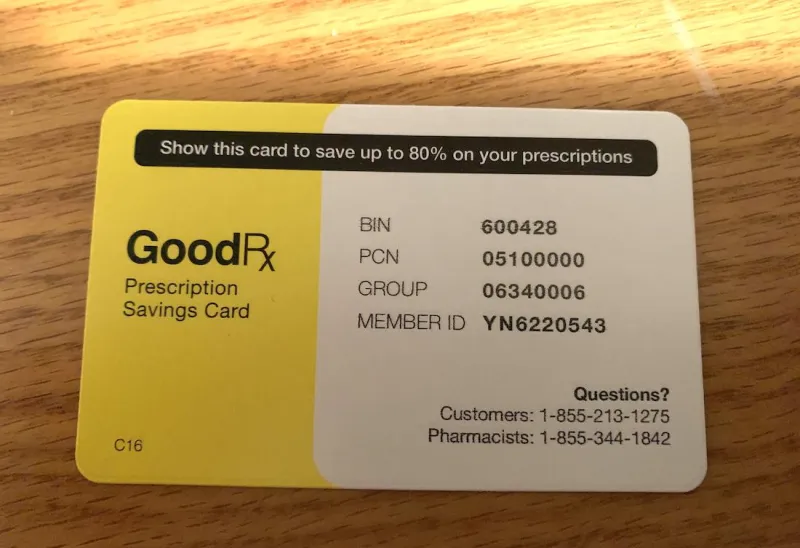
Photo: pharmacy counter prescription payment savings card, via www.cheapism.com
The average American filling a monthly prescription may pay three different prices for the identical tablet depending on which tool they bring to the counter. A copay card. A discount card. A cash price. In many cases, the difference between the highest and lowest of those numbers is not pocket change — it can be hundreds of dollars a year.
The problem is rarely access. The tools exist, they are legal, and most of them are free. The problem is that almost nobody explains how they fit together. Here is that explanation.
Why the Same Drug Has Four Different Prices
Prescription pricing in the United States is not a single number. It is a negotiation between manufacturers, pharmacy benefit managers, insurers, and pharmacies, and the price you pay depends on which lane you check out in.
If you have insurance, your cost is set by your plan's formulary and tier system. If you use a pharmacy discount card, you are tapping into a negotiated rate that sometimes beats your insurance. If you ask for the cash price, you may be surprised: the sticker price and the actual cash price are often two very different figures.
The first rule of prescription savings is simple: never assume your insurance is the cheapest option. It frequently is not.
Pharmacy Discount Cards: Free Money With Fine Print
Discount cards from services like GoodRx, SingleCare, and others negotiate reduced rates on thousands of medications. They cost nothing to use, require no sign-up in many cases, and can shave 40 to 80 percent off the retail price of generics.
When they win: Generic medications, especially at independent or mid-size pharmacies without aggressive cash pricing. A 30-day supply of a common generic like atorvastatin might run $40 at retail but $8 with a discount card.
The fine print:
- Discount card prices typically cannot be combined with insurance. You must choose one lane per transaction.
- Using a discount card instead of insurance means the purchase generally does not count toward your deductible.
- Prices vary by pharmacy and even by ZIP code. Comparing two pharmacies for the same card can reveal a 50 percent difference.
- Cards are not insurance. If a card's price changes, there is no appeals process.
Manufacturer Copay Cards and Patient Assistance Programs
For brand-name drugs, the manufacturer itself is often the best source of savings — but the programs are split into two very different buckets.
Copay assistance cards are for commercially insured patients. They can reduce a brand-name copay to as little as $5 in some cases. The catch: federally insured patients — those on Medicare or Medicaid — are legally barred from using them due to anti-kickback rules. Manufacturers are also increasingly limiting these cards annually, so check the current terms each January.
Patient assistance programs (PAPs) are for uninsured and underinsured patients who meet income criteria. These programs can provide medications free or at nominal cost. Applications require documentation — proof of income, a prescription, sometimes a physician's signature — and approval can take weeks. For expensive specialty drugs, however, the payoff dwarfs the paperwork.
A third option, direct-to-patient pharmacy services run by manufacturers themselves, has expanded in recent years and sometimes offers flat monthly pricing on popular brand drugs for cash-paying patients.
The 90-Day Refund: Why Quantity Wins
One of the least glamorous and most reliable savings tools is the 90-day fill. Pharmacies price larger quantities at a lower per-unit rate, and the math compounds across a maintenance medication taken year-round.
A patient paying $15 per 30-day fill spends $180 annually. A 90-day fill at $30, four times a year, totals $120 — a 33 percent cut for zero effort. Mail-order pharmacies integrated with insurance plans often push this even lower, though patients should verify that mail-order pricing applies to their specific plan before switching.
The 90-day strategy pairs well with discount cards: compare the card's 90-day price against the insurance copay before defaulting to the pharmacy on your plan.
Cash-Pay Pharmacies: The Wholesale Surprise
A small but growing number of pharmacy models — including certain national chains' flat-fee drug lists and direct-to-consumer cash pharmacies — publish transparent, low cash prices on a limited formulary of common generics. For medications on these lists, the cash price can undercut both insurance copays and discount cards.
The trade-off is selection. These programs cover a few hundred drugs, not the thousands on a typical formulary. But for patients on common maintenance medications — blood pressure pills, statins, metformin, SSRIs — the lists are worth checking before every renewal.
A Side-by-Side Reality Check
Consider a hypothetical patient, insured, taking a brand-name drug with a $75 copay and a generic alternative priced at $45 retail:
- Insurance copay: $75/month, $900/year
- Discount card on the generic: $12/month, $144/year
- Manufacturer copay card on the brand: $10/month, $120/year
- Cash-pay pharmacy if the generic is listed: sometimes under $10/month
The right answer depends on the drug, the plan, and the patient's tax situation — but the range itself is the point. A patient who never asks never learns that a $780 annual swing existed.
Pitfalls Worth Knowing
- The deductible trap. Discount card purchases do not count toward your deductible or out-of-pocket maximum. For patients who expect high costs later in the year, paying the insurance price early can be strategically sound.
- The price-check habit. Drug prices on discount cards fluctuate monthly. Recheck before each refill rather than assuming last month's price holds.
- Program churn. Manufacturer programs revise eligibility and drug lists annually. What worked last year may have changed.
- Pharmacy shopping. The same card can quote wildly different prices at different chains. Ten minutes of comparison shopping per prescription is among the highest-return activities in personal finance.
The Bottom Line
No single tool wins every time, which is precisely why the stack matters. Discount cards for generics, manufacturer programs for brands, 90-day fills for maintenance medications, and cash-pay lists for the lucky few whose drugs make the cut — used together, they routinely cut annual medication spending by a third or more.
The savings are legal, documented, and sitting at the counter waiting. The only step left is asking.