Before You Click 'Buy': Seven Warning Signs an Online Pharmacy Isn't What It Claims

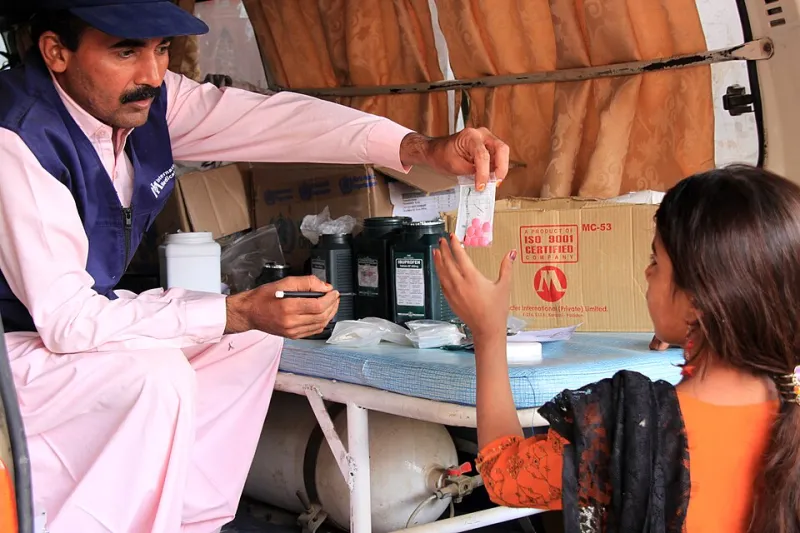
Photo: Haggis MacHaggis, CC0, via Wikimedia Commons
The convenience of ordering medication online is undeniable. Between work, caregiving, and the rising cost of an in-person visit, having prescriptions delivered to the door has become a genuine lifeline for many American households. Unfortunately, the same channel has attracted a parallel industry of illegitimate operators — websites that sell counterfeit pills, harvest credit card numbers, or simply take payment and disappear.
Regulators estimate that thousands of online pharmacies targeting U.S. consumers operate without proper licensure. The good news: spotting them does not require medical training. It requires a checklist, a little skepticism, and five minutes of verification. Here are the seven warning signs that matter most.
1. No Verifiable Licensing or Accreditation
A legitimate U.S. online pharmacy is licensed in the state where it operates and, ideally, holds VIPPS accreditation (Verified Internet Pharmacy Practice Sites) from the National Association of Boards of Pharmacy. Look for the accreditation seal on the website — then click it. Fake sites routinely paste real seals onto their pages; a genuine seal links back to the accrediting organization's verification page.
Action step: Search the NABP's database of accredited pharmacies and check your state board of pharmacy's license lookup before proceeding.
2. It Sells Prescription Drugs Without a Prescription
This is the clearest disqualifier. Any website offering to sell you a prescription-only medication — blood thinners, statins, controlled substances — after only a short questionnaire, or with no prescription at all, is operating outside the law. A legitimate pharmacy requires a valid prescription from a licensed prescriber, or arranges a legitimate telehealth consultation with a licensed provider who can actually evaluate you.
Action step: If a checkout page lets you bypass the prescription requirement entirely, close the tab.
3. Prices That Defy Explanation
A deeply discounted generic is one thing. A brand-name medication offered at a tenth of its U.S. price is something else entirely. Counterfeit operations use implausibly low prices as bait precisely because they work — the offer short-circuits the buyer's judgment. Counterfeit pills have been found to contain wrong ingredients, no active ingredient at all, or dangerous substances like fentanyl.
Action step: Compare the site's price against your local pharmacy and reputable discount programs. If the gap is enormous, treat the price itself as the red flag.
4. No U.S. Address or Working Phone Number
Scroll to the bottom of the homepage. A legitimate pharmacy displays a physical U.S. business address, state license information, and a phone number staffed by actual personnel — including access to a licensed pharmacist for questions. Sites that list only a web form, a P.O. box, or an overseas address with no U.S. presence should be treated as unverified.
Action step: Call the phone number during business hours. If no one answers, or the representative cannot answer basic questions about dispensing, walk away.
5. No Pharmacist Available — Ever
Under federal and state law, dispensing pharmacies must make a pharmacist available to counsel patients. Illegitimate sites have no pharmacist on staff, because there is no legitimate pharmacy. If the website offers no way to ask a medication question and no named, licensed professionals anywhere on the site, that silence is telling.
Action step: Look for a named pharmacist, license numbers, and a counseling option. Verify any license number you find with the state board.
6. Privacy and Payment Practices That Put You at Risk
Rogue pharmacies are as interested in your data as your money. Warning signs include checkout pages without HTTPS encryption (no padlock icon in the browser bar), requests for unnecessary personal details such as your Social Security number, and insistence on payment by wire transfer, cryptocurrency, gift cards, or peer-to-peer apps. Legitimate pharmacies accept standard payment cards and protect your health information under federal privacy law.
Action step: Never enter payment or health information on a page without HTTPS, and decline any site demanding untraceable payment methods.
7. Spam, Pop-Ups, and Unsolicited Offers
Legitimate pharmacies do not cold-email strangers offering discounted controlled substances. If a website found you through unsolicited email, aggressive pop-up ads, or links from social media accounts with no verifiable identity, its acquisition method says everything about its operating standards.
Action step: Do not click links in unsolicited medication offers. Instead, navigate independently to a pharmacy you have verified through the steps above.
What a Legitimate Online Pharmacy Looks Like
For contrast, a trustworthy digital pharmacy will typically offer all of the following: state licensure displayed and verifiable, a requirement for a valid prescription, a U.S. address and reachable phone support, access to a licensed pharmacist, secure checkout with standard payment options, and a clear privacy policy explaining how your health data is used.
If you encounter a site you suspect is fraudulent, report it to the FDA through its online reporting portal and to the Federal Trade Commission. Reporting takes minutes and helps protect other consumers.
The Bottom Line
Ordering medication online can be safe, affordable, and genuinely convenient — when the pharmacy on the other end is real. The seven red flags above are not subtle; they are designed to be noticed by anyone who knows to look. Verify the license, demand the prescription requirement, test the phone number, and protect your payment details. Your health, and your financial information, deserve nothing less.