The Whole Truth About Half Pills: What Your Medication Label Isn't Telling You
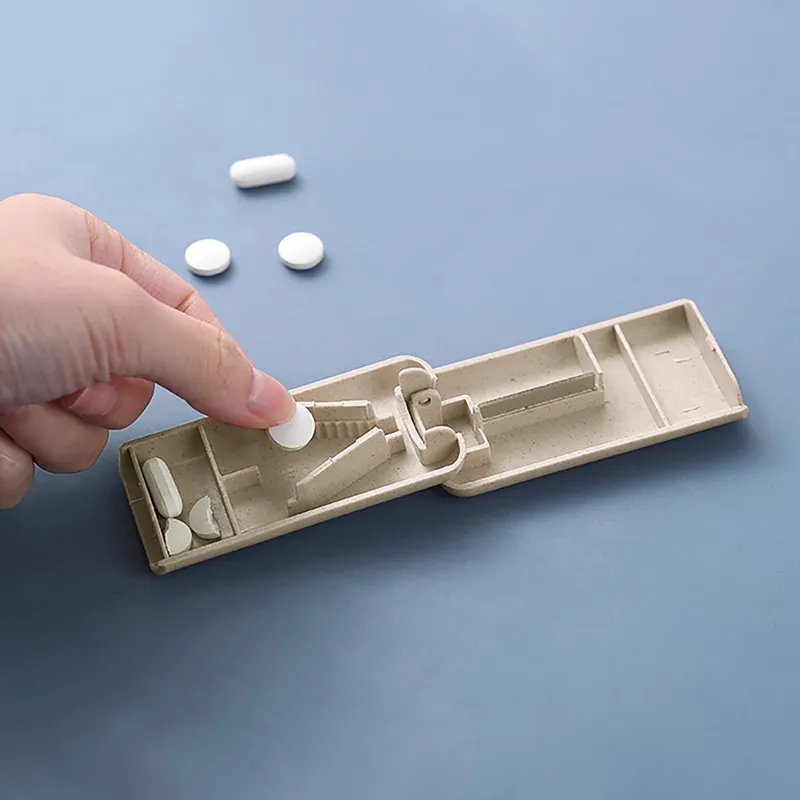
Photo: pill splitter dividing tablet on white counter close up, via i5.walmartimages.com
Most Americans take their prescriptions without a second thought. The bottle says one tablet daily, so one tablet goes down the hatch — sometimes whole, sometimes chewed, occasionally crushed into applesauce for easier swallowing. For a surprising number of medications, those small alterations make no difference. For others, they can turn a carefully calibrated treatment into either a dangerous surge of drug or a wasted dose that never works at all.
Understanding the difference doesn't require a pharmacy degree. It requires knowing a few rules of the road — and knowing which questions to ask before you pick up that pill splitter.
Why Some Tablets Are Built Like Time Capsules
Modern pharmaceutical design is more sophisticated than the plain white tablets most of us picture. Two technologies in particular change the game.
Extended-release (ER, XR, or SR) formulations are engineered to release medication slowly over hours. A single tablet might contain enough active drug for an entire day, doled out in measured increments as it moves through the digestive tract. Crush or chew one of these, and you've broken the dam — the full day's dose hits your system at once. With drugs like morphine extended-release or certain blood pressure medications, that spike can be genuinely dangerous.
Enteric coatings serve a different purpose: they're a protective shell designed to survive the acidic environment of the stomach and dissolve only once they reach the intestine. Some drugs need this protection because stomach acid destroys them; others need it because they'd irritate the stomach lining. Either way, crushing that coating defeats it. The drug may be deactivated before it's absorbed, or delivered somewhere it was never meant to be.
A quick field guide to tablet names: if you see suffixes like ER, XR, XL, SR, CR, or the words "extended," "sustained," or "delayed" on the label, treat the tablet as off-limits for splitting and crushing unless a pharmacist explicitly says otherwise.
When Splitting Makes Perfect Sense
Pill splitting isn't inherently risky — in fact, it's often encouraged, sometimes even for financial reasons. A higher-dose tablet frequently costs the same as a lower-dose one, so doctors sometimes prescribe double the strength with instructions to halve it. For American patients paying cash prices or managing high-deductible plans, that can cut a medication bill meaningfully.
Splitting is generally safe when a tablet:
- Is immediate-release (no special coating or release mechanism)
- Has a scored line down the middle, which signals the manufacturer designed it to be divided
- Is not a capsule, gelcap, or coated tablet
The catch is accuracy. A 2021-adjacent body of research on split-tablet weight variation found that hand-splitting produces uneven halves more often than patients expect, particularly with small or crumbly tablets. A cheap pill splitter from any US drugstore improves consistency, and a pharmacy can split doses in some cases. For medications with a narrow therapeutic window — thyroid drugs, blood thinners like warfarin, seizure medications — even small dose variation matters, so ask before dividing anything.
Crushing: A Necessity for Some, a Hazard for Others
For patients with swallowing difficulties — a common challenge for older adults and people with conditions like Parkinson's disease or post-stroke dysphagia — crushing is often the only practical option. Done correctly, it's a reasonable solution. Done blindly, it can be a serious one.
Safe-to-crush candidates are typically immediate-release tablets with no coating. But even then, a few practical notes apply:
- Some crushed medications taste terrible or irritate the mouth. Mixing with applesauce, yogurt, or pudding helps — but check first, because certain drugs shouldn't be taken with dairy.
- Buccal and sublingual tablets (dissolved under the tongue or against the cheek, like some nitroglycerin forms) must never be crushed or swallowed. They're absorbed through the mouth's tissue, not the stomach.
- Capsules are a mixed bag. Some are simply a convenient shell around ordinary powder and can be opened; others contain beads designed for timed release. Never assume.
A practical habit worth adopting: before crushing anything, ask the pharmacist one direct question — "Can this be safely crushed, and what should I mix it with?" It takes ten seconds and eliminates most of the risk.
The Timing Question: Food, Acid, and an Empty Stomach
Even a perfectly intact tablet can underperform if it's taken at the wrong time. Label instructions like "take with food," "take on an empty stomach," or "take one hour before breakfast" aren't bureaucratic fine print — they reflect how the drug is absorbed.
A few common examples:
- Tetracycline antibiotics and thyroid medication (levothyroxine) bind with calcium, iron, and other minerals. Take them with milk or a calcium-fortified breakfast, and much of the dose never makes it into your bloodstream.
- Drugs like omeprazole and other PPIs work best shortly before a meal, when the acid-producing cells they target are most active.
- Certain medications depend on stomach acid for absorption — ironically, the very thing acid reducers suppress. Taking an antifungal like ketoconazole with a proton-pump inhibitor can meaningfully reduce how much gets absorbed.
- Grapefruit juice deserves its own warning label: it interferes with enzymes that metabolize a long list of drugs, including some statins and blood pressure medications, effectively amplifying the dose.
The safest default is to follow the label exactly and ask the pharmacist to clarify anything vague. "Take with food" can mean anything from a full meal to a few crackers, depending on the drug.
A Five-Question Checklist for Your Next Pharmacy Visit
Bring this list — or the actual pill bottles — to the counter. A good pharmacist will answer all five in a few minutes, at no charge.
- Can this tablet be split or crushed? Get an explicit yes or no for each medication, including over-the-counter drugs and supplements.
- Does it need to be taken with food, without food, or at a specific time of day?
- Are there any foods or drinks — dairy, grapefruit, alcohol — I should avoid around this dose?
- If I can't swallow it, what's the safest alternative? Many medications come in liquids, dissolvable forms, or crushable versions you may not know exist.
- Does anything on my list interact with anything else? Especially relevant for anyone seeing multiple prescribers or filling prescriptions at more than one pharmacy.
The Bottom Line
Medication errors at the point of consumption — splitting what shouldn't be split, crushing what must stay whole, mistiming a dose — are among the most preventable problems in American healthcare. They don't stem from carelessness so much as from reasonable assumptions that happen to be wrong.
The correction costs nothing. It's a conversation, a label read carefully, and a five-question checklist. Your pharmacist has the answers; all you have to do is ask.