Tapped, Not Typed: The Quiet Journey of a Refill Request Through Your Pharmacy's App
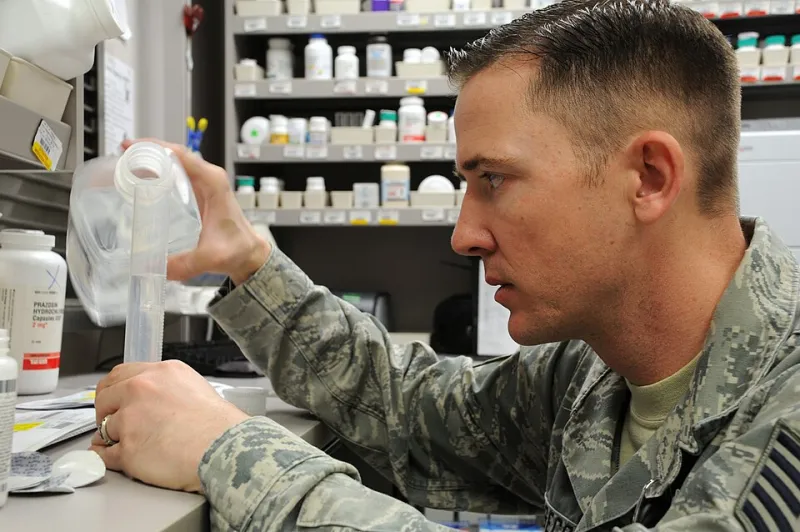
Photo: U.S. Space Force image by Tech. Sgt. Julius Delos Reyes, Public domain, via Wikimedia Commons
At 7:42 on a Tuesday morning, a patient in Ohio taps "Refill" on her pharmacy's mobile app. By 7:43, her request has been routed through a national server, filtered by an automated rules engine, and dropped into a work queue that a pharmacy technician will open sometime before lunch. Nothing about this process is visible to her — and that invisibility is exactly why so many digital pharmacy interactions go smoothly, and why some go quietly wrong.
Understanding what happens behind the glass matters, because the app is not a direct line to a pharmacist. It is a piece of workflow software, and like any software, it rewards users who know how it thinks.
Your Message Is Not a Conversation
The first thing to understand is that most pharmacy apps treat an incoming message as a task, not a dialogue. Refill requests are usually handled by an automated triage layer before any human sees them. The system checks three things almost instantly: whether the prescription is eligible for a refill under the prescriber's original instructions, whether refills remain on file, and whether the medication is in stock at your preferred location.
If all three checks pass, the request moves to a production queue and may be filled without a single person reading your note. If any check fails — you're too early, you're too late, the drug is on backorder — the request is flagged and routed to a technician, typically at the store level.
Free-text questions, by contrast, are read by humans. But which humans varies enormously. At chain pharmacies, general questions submitted through an app portal are often answered by call-center staff at a remote location, not by the pharmacist at your corner store. That staff member can see your profile and answer routine questions, but they may not be the clinician who will counsel you at pickup.
The Triage Hierarchy, Decoded
Pharmacy messages generally fall into tiers, and knowing them helps you phrase requests that move faster:
- Tier 1 — Automated: Refill requests, pickup notifications, and basic status checks. Fastest route, no human needed.
- Tier 2 — Technician-level: Insurance rejections, prior authorization follow-ups, transfer requests. Handled by support staff, often within one business day.
- Tier 3 — Pharmacist-level: Dosing questions, interactions, side effects, anything clinical. These should — and legally often must — reach a licensed pharmacist.
The common failure mode is sending a Tier 3 question through a Tier 1 channel. "Can I take this with my blood pressure pill?" typed into a general comment box may sit in a queue for days or draw a boilerplate answer telling you to call the store. Clinical questions deserve a clinical channel — either the app's dedicated "ask a pharmacist" feature, if one exists, or an old-fashioned phone call.
Where the System Genuinely Helps
Digital tools excel at the mechanical work. Refill requests submitted through an app bypass hold music, phone tag, and the "we never got that message" problem. Automatic routing also creates a written record — if a request is delayed, you have a timestamped trail, which is useful when dealing with insurance issues or a prescriber's office.
App-based refill reminders also reduce a real safety risk: unintended gaps in maintenance medications. Patients who manage blood pressure or diabetes medications through app notifications refill more consistently than those relying on memory. For consumers focused on stretching a prescription budget, apps also surface generic substitution prompts and discount programs that a busy counter conversation might never mention.
Where It Fails Patients
The weaknesses are just as predictable. Urgent problems — a suspected adverse reaction, a missed dose of a critical medication, a suspected error at pickup — do not belong in an asynchronous message queue. Response times for app messages are measured in hours or days, not minutes, and no automated system can triage an emergency.
There's also a privacy consideration patients rarely think about. Shared family accounts, linked profiles, and notification previews on a locked screen can expose medication information to anyone who picks up your phone. If others use your device, review the app's notification settings and account structure before relying on it for sensitive prescriptions.
Finally, automation can silently reject legitimate requests. A refill submitted two days early because you'll be traveling may bounce without explanation. When an app says no and gives no reason, that's your cue to call — a human can often approve an early refill with a quick override that software cannot.
Getting Faster, Better Answers
A few habits dramatically improve results:
- Match the channel to the question. Refills through the app; clinical questions to a pharmacist directly.
- Be specific and complete. Include the prescription number, the exact question, and any relevant timeline. "Need refill of metformin, Rx #12004567, traveling Friday" outperforms "need my medicine."
- Send during business hours. Messages sent at 11 p.m. sit until the next shift anyway; sending mid-morning often means same-day handling.
- Confirm critical changes by phone. Dose changes, new medications, and insurance switches are worth a live conversation to catch errors software misses.
- Keep your own records. Screenshot confirmations. A timestamped receipt resolves disputes quickly.
The Tool, Not the Replacement
Pharmacy apps have earned their place in American healthcare — they're efficient, they leave a paper trail, and they make routine refills nearly effortless. But they are workflow tools built for volume, not substitutes for the licensed professional behind the counter. Use the app for what it does well, escalate anything clinical to a human, and treat every automated rejection as a prompt to ask why. The patients who get the most from digital pharmacy tools are the ones who know exactly which door they're knocking on.