Out of the Cabinet, Out of the House: A Year-Round Guide to Getting Rid of Old Medications the Right Way
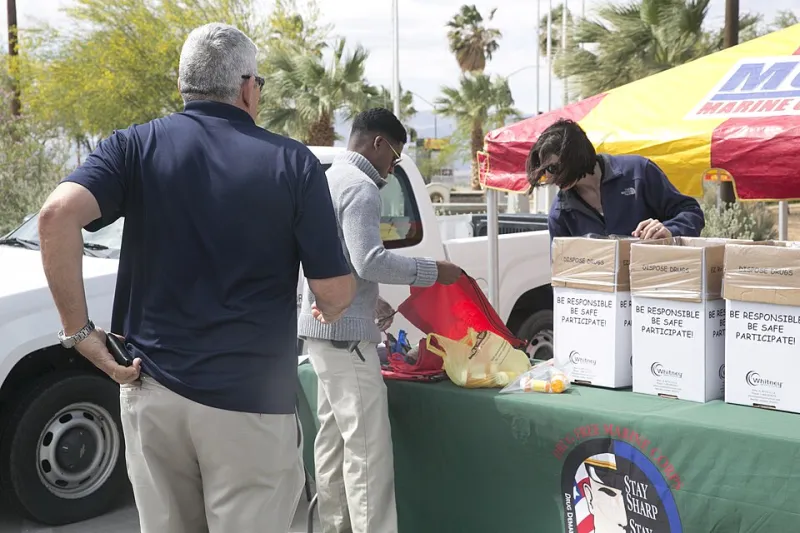
Photo: Cpl. Thomas Mudd, Public domain, via Wikimedia Commons
The spring cleaning instinct usually stops short of the medicine cabinet. Bottles get sorted, expired tubes get tossed in the trash, and a suspicious bag of unidentified capsules migrates to the back of a drawer for another year. It's an understandable habit — most Americans were never taught how to dispose of medication properly, and the default methods most of us grew up with turn out to be the two worst options available.
At MedsByUSA, we spend a lot of time talking about getting the right medicine affordably. But responsible medicine ownership has a final chapter, and it's the one most frequently skipped: getting unused and expired drugs out of the house safely.
Why the Trash Can and the Toilet Both Fail
For decades, the standard advice was blunt: flush it or trash it. Both approaches carry consequences that weren't widely understood a generation ago.
Flushing sends active pharmaceutical compounds directly into wastewater systems. Municipal treatment plants are engineered to handle biological waste, not synthetic hormones, opioids, or antibiotics. Trace levels of these compounds have been detected in rivers and streams across the country, and researchers have documented effects on aquatic life — from altered fish behavior to antibiotic-resistant bacteria developing downstream of treatment facilities.
The trash seems safer, but it solves one problem by creating another. Pills in a garbage bag are accessible to children, pets, and anyone who goes through household waste looking for divertible drugs. In communities affected by the opioid crisis, discarded prescriptions have become a documented source of accidental first exposure for teenagers. A bottle thrown away intact is an unsecured supply of medication sitting at the curb.
There's a third failure mode, too: doing nothing. Opioids, benzodiazepines, and stimulants lingering in a cabinet are a leading source of household diversion and accidental ingestion. An expired prescription you've forgotten about is still a full prescription to someone else.
What Actually Happens at a Take-Back Site
The good news is that the disposal infrastructure in the United States has improved dramatically, and most Americans live within a short drive of a legal disposal option.
Drug take-back programs funnel collected medications into secure, licensed destruction — typically high-temperature incineration that neutralizes the active compounds rather than diluting them into waterways or landfills. Collection sites operate under DEA rules, and the process is deliberately frictionless: no questions asked, no identification required, no need to sort or explain what you're dropping off.
There are two main channels:
- Permanent drop-off bins, located at many pharmacies, hospitals, and police stations. These are available year-round during normal business hours. Major chains — including the pharmacy counters most Americans already visit — host thousands of these bins nationwide.
- National Prescription Drug Take-Back Days, held by the DEA typically in April and October. These one-day events add temporary collection points in communities that lack permanent bins, and they routinely collect hundreds of tons of medication nationwide in a single day.
The DEA maintains a searchable locator at its diversion control website, and many state health departments publish their own county-level maps. A two-minute search usually turns up a drop-off point within a few miles of home.
The Disposal Checklist, Item by Item
Not everything in the cabinet follows the same rules. Here's how to handle the common categories:
Prescription opioids and controlled substances. These are the top priority for removal. Use a take-back bin or event — do not attempt to dispose of controlled substances on your own if a take-back option is accessible. If it truly isn't, the FDA maintains a short list of medicines it recommends flushing precisely because the diversion risk outweighs the environmental one, and most of the listed drugs are opioids.
Everyday expired prescriptions and OTC pills. Take-back first. If no option is available, the FDA's fallback disposal method is to mix the pills with something unappealing — used coffee grounds, cat litter, or dirt — seal the mixture in a plastic bag or disposable container, and place it in the trash. This makes the medication unrecognizable and unpalatable. Remember to remove or black out personal information on the bottle before discarding it.
Inhalers. These are pressurized canisters, not pills, and they shouldn't go in an incinerator-bound bin or be punctured. Some inhalers can be safely disposed of in household trash per the label; older models containing chlorofluorocarbons should be returned to a pharmacy take-back program. Read the product instructions or ask your pharmacist.
Liquid medications, patches, and needles. Liquids can be mixed using the coffee-ground method. Medicated patches should never be flushed — many contain potent active ingredients — and belong in a take-back bin. Sharps and needles follow separate rules entirely: most states require an FDA-cleared sharps container and prohibit loose needles in household trash or recycling.
Vitamins and supplements. Technically low-risk, but there's no reason to keep a decade-old bottle of multivitamins. The coffee-ground method works fine here.
Making Disposal a Standing Habit
The cleanest approach is to build disposal into the routine you already have. When you do your annual medicine cabinet audit — checking expiration dates, consolidating duplicates, restocking first-aid basics — end the session with a disposal bag. Whatever is expired, unwanted, or left over from a changed prescription goes into the take-back pile, and the pile goes to the bin within the week.
A few habits worth adopting year-round:
- Keep a designated envelope or bag in the cabinet for expired items, so disposal doesn't require a full reorganization session.
- Ask at the pharmacy counter. If your regular pharmacy doesn't host a bin, the staff can usually point you to the nearest one — and if enough customers ask, pharmacies sometimes add one.
- Never share the leftovers. A prescription that was right for you may be dangerous for a friend or family member, even with similar symptoms.
- Check the calendar twice a year. The DEA's take-back days are reliable anchors — put the spring and fall dates in your phone.
The final step of any medication cleanup isn't restocking the shelf. It's making sure what came off the shelf never comes back to cause harm — to your household, or to anyone else's.