Measured Twice, Dosed Once: Why Liquid Medicine Demands the Right Tool
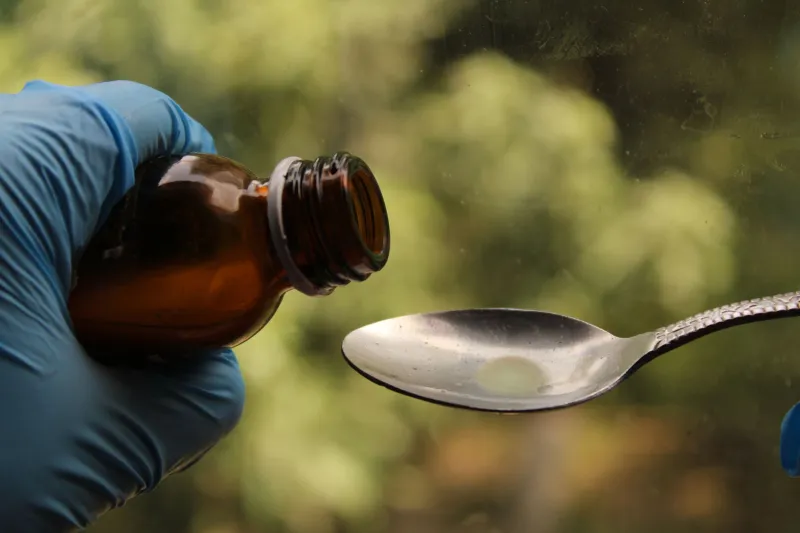
The Most Familiar Tool in the Kitchen Is the Wrong One for the Job
A teaspoon is a unit of measurement. A teaspoon from the kitchen drawer is a piece of cutlery. In everyday cooking, the difference rarely matters. In liquid medicine, it can.
American homes are full of spoons that hold anywhere from roughly 2.5 milliliters to more than 7 milliliters. A standard measuring teaspoon is defined as about 4.93 milliliters in the United States, but the spoon used to stir coffee or serve soup is not held to that standard. When a label says "take 5 mL" and a household spoon is used instead, the actual dose may land well above or below the intended amount. For an adult taking a common over-the-counter syrup, that may mean little. For a child receiving a weight-based prescription, or for a medicine with a narrow safety margin, it can mean a great deal.
The problem is not that Americans are careless. It is that liquid dosing invites improvisation. A capful, a swig, a splash, and a soup spoon all feel like measurements because they are familiar. They are not measurements in any useful sense. A cap is not a standardized volume. A swig is not a unit. And "just a little" is not a dose.
Milliliters and Teaspoons Are Not Interchangeable
On prescription and over-the-counter labels, the milliliter is the unit that matters. One milliliter is one-thousandth of a liter, and it is the standard unit for oral liquid medicines in the United States. A teaspoon is a familiar household reference, not a precise clinical instruction. The two are sometimes treated as if they were the same because 5 mL is often described as one teaspoon. That shorthand has caused real confusion.
A label that reads "5 mL (1 teaspoon)" is offering a conversion, not permission to reach into the silverware drawer. The parenthetical is a bridge for people who think in teaspoons, but the measured dose is the milliliter value. When a dosing device is marked in teaspoons only, or when a label mixes milliliters and teaspoons without a clear device, the risk of error rises. The safest approach is to use the unit printed on the prescription and to measure with a device marked in that same unit.
This distinction matters most for children. Pediatric liquid medicines are often dosed by weight and age, and small differences in volume can translate into meaningful differences in the amount of active ingredient a child receives. Acetaminophen and ibuprofen are common examples. Both are safe when used as directed and both can cause harm when repeated overdosing occurs. The margin for error is not a reason to panic. It is a reason to use the right tool every time.
Where the Errors Come From
Most liquid dosing mistakes are not dramatic. They are small, repeated, and ordinary. A parent pours syrup into a kitchen spoon because the dosing cup is in the dishwasher. A caregiver estimates half a capful because the label is vague. A patient uses a tablespoon instead of a teaspoon. A child drinks from a bottle cap while an adult looks on. None of these moments feels like a safety event. Over several days, however, the cumulative difference can become clinically relevant.
There is also the problem of the disappearing device. Many liquid medicines ship with a dosing cup or oral syringe. The device gets separated from the bottle, lost in a drawer, or thrown away with the packaging. The medicine remains, and the household improvises. This is one reason pharmacists increasingly emphasize keeping the measuring device with the medicine, not in a miscellaneous kitchen container.
In 2026, labels and packaging are better than they once were, but they are not uniform. Some products still use teaspoon-forward language. Some dosing cups are marked in ounces on one side and milliliters on the other. Some oral syringes are packaged separately from the bottle. The consumer's job is not to memorize every conversion. It is to confirm the unit, confirm the device, and ask when either is unclear.
What to Look for on the Label
The primary instruction should be expressed in milliliters. A well-written label will state the dose in mL and may include a teaspoon equivalent in parentheses. It should also specify how often the medicine may be taken and the maximum amount in a 24-hour period. For children, the label should reflect age or weight parameters, and the prescriber's instructions should match the pharmacy label. If a label says "take one capful," treat that as incomplete rather than convenient. Ask the pharmacist what volume a capful represents for that specific product. If a label says "take 1 teaspoon," ask whether the pharmacy can provide an oral syringe marked in milliliters. If a label uses only household units and the medicine is for a child, request clarification before leaving the counter.
Good labeling also includes a clear concentration. Liquid medicines come in different strengths, and the same volume can contain different amounts of active ingredient. A 5 mL dose of one concentration is not the same as a 5 mL dose of another. This is why the concentration should be checked every time a new bottle is opened, even if the medicine has been used before. A refill that looks identical may carry a different concentration if the prescriber or pharmacy has changed products.
The Counter-Side Checklist
Before leaving the pharmacy with a liquid medicine, confirm the following:
- The dose is written in milliliters, and you understand the unit.
- The measuring device is marked in milliliters, not only in teaspoons or ounces.
- The device fits the bottle opening or is designed for oral use.
- The device stays with the medicine after you get home.
- The concentration on the label matches what you expect.
- You know the maximum daily dose and the interval between doses.
- For a child, you know the weight or age range the dose is based on.
- You have asked what to do if a dose is missed or accidentally repeated.
If the pharmacy cannot provide a suitable device, ask for one. Oral syringes are inexpensive, accurate, and easy to clean. Dosing cups are acceptable when they are marked clearly in milliliters and used at eye level on a flat surface. A kitchen spoon is not a substitute for either.
A Small Habit With Real Value
Liquid medicine does not need to be complicated. It needs to be measured. The difference between a careful dose and a casual pour is often a matter of seconds, but the consequences can last much longer. For families managing a child's fever, for adults taking a nightly liquid prescription, and for anyone who has ever trusted a capful, the fix is simple: use the device that matches the label, keep it with the bottle, and ask before you estimate.
MedsByUSA's approach to affordable medicine includes the same principle that applies to cost: clarity matters. A lower-priced prescription is not a bargain if the dose is unclear. A familiar spoon is not a measuring tool. And a milliliter is not a suggestion. It is the number that keeps the dose honest.